English


Views: 0 Author: Site Editor Publish Time: 2026-09-01 Origin: Site
CO₂ cartridges are widely used as a compact and convenient gas source for air guns, paintball markers, airsoft equipment, bicycle inflators, and other compatible devices. Among the available sizes, the 12g CO₂ cartridge is one of the most commonly used options because of its compact design, convenient replacement, and portability. For air gun brands, distributors, wholesalers, retailers, and equipment manufacturers, 12g CO₂ cartridges are also a popular choice for bulk sourcing and OEM supply.
For businesses purchasing CO₂ cartridges in large quantities, choosing the right CO₂ cartridge manufacturer or supplier is just as important as selecting the correct product specification. Factors such as cartridge size, thread type, dimensions, gas capacity, equipment compatibility, temperature, material quality, production consistency, and packaging can all affect product performance and customer satisfaction.
This guide explains what CO₂ cartridges are, how they work, the differences between common cartridge sizes, how temperature affects performance, and how to choose the right cartridge for different applications. It also covers important considerations for bulk buyers, distributors, and brands looking for OEM or private-label CO₂ cartridge solutions.
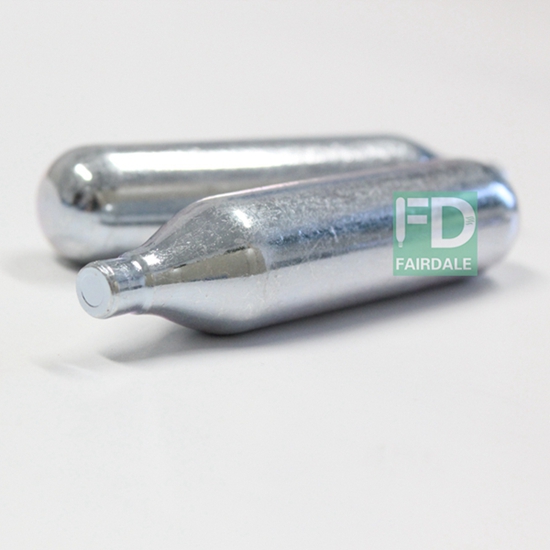
A CO₂ cartridge is a small, sealed steel cylinder filled with compressed carbon dioxide gas. It provides a convenient and portable gas source for compatible air guns, paintball markers, inflators, and other gas-powered equipment.
For B2B buyers, CO₂ cartridges can be sourced directly from manufacturers or wholesale suppliers in different specifications and packaging formats. Depending on the application, buyers may require specific cartridge sizes, connection types, surface finishes, branding, or packaging configurations.
When a CO₂ cartridge is installed into compatible equipment, the cartridge is punctured or connected through a suitable valve mechanism. The compressed CO₂ gas is then released into the equipment to provide the required gas pressure.
CO₂ cartridges are commonly used in:
CO₂ air pistols and air rifles
Paintball markers
CO₂-powered airsoft equipment
Bicycle tire inflators
Emergency inflation devices
Pneumatic equipment
Other portable gas-powered applications
For commercial applications, the cartridge size, connection type, dimensions, material, and operating requirements should match the specifications of the target equipment. Consistent manufacturing tolerances are also important for businesses purchasing cartridges in bulk.
A CO₂ cartridge stores compressed carbon dioxide gas inside a small steel cylinder. The cartridge is sealed to retain the gas until it is installed in compatible equipment.
During installation, the equipment's puncture or valve mechanism opens the cartridge and allows the compressed CO₂ gas to flow into the system. The released gas provides the pressure needed to operate the equipment.
For a CO₂-powered air gun, for example, the gas is released through the valve system when the gun is fired. The gas pressure drives the firing mechanism and propels the projectile.
For manufacturers and distributors, stable cartridge dimensions and sealing performance are important because they can affect compatibility, gas retention, and overall product consistency. A reliable CO₂ cartridge manufacturer should maintain controlled production processes and quality inspections to ensure consistent products across different production batches.
CO₂ is widely used in portable equipment because it can provide a useful gas supply in a small cartridge. This makes it suitable for both end users and businesses looking for a convenient gas solution that is easy to package, transport, and distribute.
Key advantages include:
Compact cartridge size
Lightweight and portable design
Convenient replacement
Easy transportation
No external compressor required for cartridge-based systems
Multiple cartridge sizes and configurations
Suitable for sporting and inflation applications
Convenient for bulk purchasing and wholesale distribution
For air gun brands, wholesalers, distributors, and retailers, working with an experienced CO₂ cartridge supplier can also provide additional options such as OEM production, private labeling, custom logo printing, customized packaging, and bulk orders.
These characteristics make CO₂ cartridges particularly practical for portable equipment and provide flexible sourcing options for both individual users and B2B customers.
One of the main advantages of a CO₂ cartridge is its compact size.
A 12g CO₂ cartridge is small enough to carry as a spare, making it suitable for compatible air pistols, air rifles, paintball equipment, and other portable devices.
For users who prefer a compact gas source instead of carrying a larger compressed-air tank, CO₂ cartridges provide a convenient solution.
Many cartridge-based systems are designed for relatively quick cartridge replacement.
After a cartridge has been used, the empty cartridge can be removed and replaced according to the equipment manufacturer's instructions.
This can be especially useful for recreational shooting, training, competitions, and outdoor applications where portability and convenience are important.
CO₂ cartridges provide a ready-to-use gas supply without requiring users to refill a large tank.
For many compact applications, users can simply keep spare cartridges available and replace the cartridge when necessary.
This makes disposable CO₂ cartridges convenient for individual users as well as commercial applications.
A high-quality CO₂ cartridge with consistent dimensions, material quality, sealing performance, and manufacturing tolerances can help provide reliable gas delivery.
However, cartridge performance is also influenced by:
Ambient temperature
Firing frequency
Equipment design
Valve efficiency
Cartridge capacity
Seal condition
Operating conditions
Therefore, consistent performance depends on both cartridge quality and equipment design.
CO₂ and compressed air, commonly known as HPA or High-Pressure Air, are both used in air-powered equipment, but they have different characteristics.
| Feature | CO₂ | Compressed Air / HPA |
|---|---|---|
| Portability | Excellent for compact cartridge systems | Usually requires a larger tank |
| Gas Supply | Disposable cartridges available | Usually supplied from refillable tanks |
| Temperature Sensitivity | Relatively high | Generally lower |
| Equipment Cost | Convenient for small applications | Usually higher initial investment |
| Refilling | Replace the cartridge | Requires tank refilling |
| Convenience | Very convenient for portable equipment | Better for high-volume applications |
| Pressure Stability | Can vary with operating conditions | Generally more stable |
For compact equipment specifically designed for CO₂ cartridges, CO₂ can be a convenient and practical choice.
For high-volume applications requiring highly stable pressure, compressed air may be more suitable.
The best option depends on the equipment design and intended application.
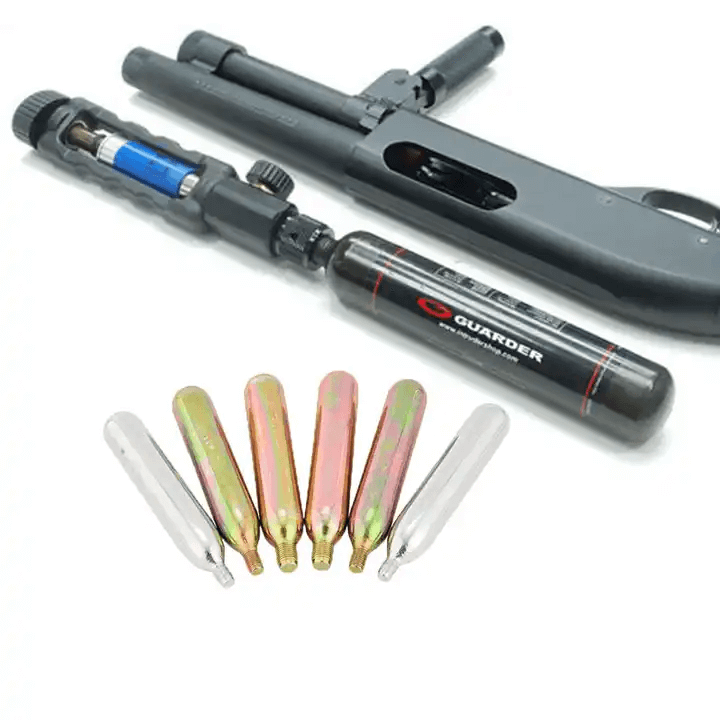
Another important factor when selecting a CO₂ cartridge is the connection type.
Threaded CO₂ Cartridges
A threaded CO₂ cartridge has a threaded neck designed to connect to compatible equipment.
The cartridge is secured by screwing it into the corresponding threaded connection.
Advantages can include:
Secure mechanical connection
Convenient installation
Reliable positioning
Easy cartridge replacement
The thread specification must match the equipment exactly.
Non-Threaded CO₂ Cartridges
Non-threaded CO₂ cartridges are generally installed into a cartridge chamber designed for a compatible puncture mechanism.
The cartridge is positioned inside the equipment and secured by the equipment's cartridge holder or tightening mechanism.
Non-threaded cartridges are commonly used in equipment specifically designed for this type of cartridge.
The correct choice depends on your equipment.
Before purchasing, check:
Cartridge weight
Thread type
Cartridge dimensions
Neck configuration
Puncture mechanism
Equipment manufacturer's specifications
Cartridges with the same nominal weight are not necessarily interchangeable.
Cartridge capacity affects how much gas is available before the cartridge needs to be replaced.
In general:
Larger cartridge capacity = more available CO₂ gas
However, this does not necessarily mean:
Larger cartridge = higher power
Power and velocity depend on the complete equipment system, including:
Valve design
Operating mechanism
Gas flow
Barrel design
Projectile
Temperature
Equipment configuration
Therefore, users should always select the cartridge size specified by the equipment manufacturer.
Temperature can significantly affect CO₂ performance.
As temperature changes, the pressure characteristics of compressed CO₂ gas also change. Cold conditions can reduce available gas pressure and may affect equipment performance.
During repeated firing, rapid gas release can also cause the cartridge and surrounding components to become colder.
Possible effects include:
Reduced shot velocity
Inconsistent performance
Lower gas pressure
Condensation or frost around the cartridge
At high temperatures, CO₂ pressure can increase. Therefore, cartridges should be protected from excessive heat and direct sunlight.
Rapid firing consumes CO₂ quickly.
As gas is released repeatedly, the cartridge can cool, which may affect the pressure available to the equipment.
This is one reason why users may experience different performance during slow firing compared with continuous rapid firing.
Different devices may consume different amounts of CO₂ even with the same cartridge size. Gas consumption is affected by valve design, equipment efficiency, seal condition, temperature, and firing frequency. Efficient equipment can make better use of each cartridge and provide more consistent performance. Therefore, the number of shots or operating time per cartridge can vary between different equipment models and applications.
1. Proper Storage
Store CO₂ cartridges in a cool, dry, and well-ventilated location, away from direct sunlight, heaters, open flames, and other heat sources. Avoid leaving cartridges in hot vehicles or areas with large temperature changes. For long-term storage, keeping cartridges in their original packaging can help protect them from moisture, scratches, and physical damage.
2. Cartridge Inspection
Always inspect a CO₂ cartridge before installation. Look for deep dents, corrosion, cracks, deformation, damaged necks, or other visible defects. A damaged cartridge should not be used, as physical damage may affect its integrity and performance. Select a clean and undamaged cartridge instead.
3. Correct Cartridge Selection
Choose a CO₂ cartridge that is compatible with your equipment. Check the cartridge size, gas capacity, thread type, neck configuration, and connection method before use. For example, 12g threaded and 12g non-threaded CO₂ cartridges may have the same capacity but are designed for different connection systems.
4. Safe Installation
Always install the cartridge according to the equipment manufacturer's instructions. Use the correct installation mechanism and avoid applying excessive force. Never manually puncture, cut, crush, drill, weld, or modify an unused CO₂ cartridge, as improper handling can create unnecessary safety risks.
5. Proper Use and Handling
Use CO₂ cartridges only with compatible equipment and within the manufacturer's specified operating requirements. After installation, check that the connection is secure and that there are no obvious signs of leakage. Proper handling and correct cartridge selection help maintain safe, reliable, and consistent CO₂ performance.
Proper storage helps maintain cartridge condition before use.
For long-term storage:
Keep cartridges in a dry environment.
Avoid direct sunlight.
Keep them away from heaters and other heat sources.
Avoid excessive humidity.
Store cartridges in their original packaging when practical.
Inspect cartridges before installation.
For steel cartridges, controlling humidity is particularly important because prolonged exposure to moisture can contribute to surface corrosion.
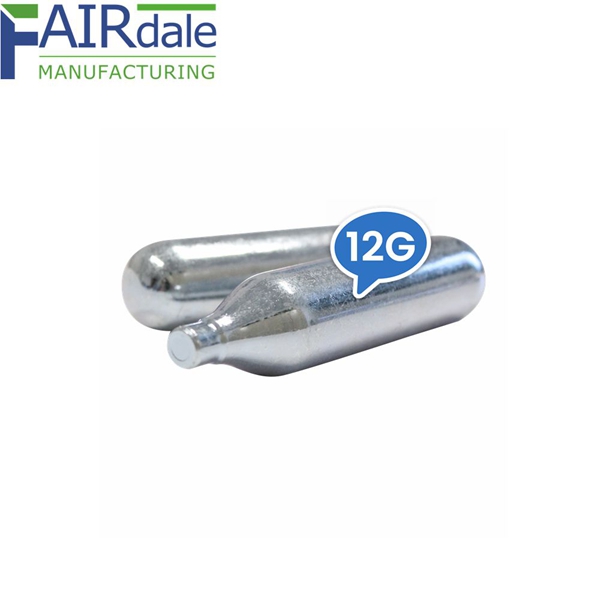
Selecting the right CO₂ cartridge requires more than checking the cartridge weight. Compatibility, gas capacity, operating conditions, and manufacturing quality all affect cartridge performance and reliability.
Before purchasing a CO₂ cartridge, first check the specifications of the equipment. The cartridge must match the device in terms of size, dimensions, connection type, and puncture mechanism. Even cartridges with the same gas capacity may not be interchangeable if their neck or thread specifications are different.
Check the following details:
Cartridge weight
Thread type
Cartridge dimensions
Neck configuration
Puncture mechanism
Equipment manufacturer's specifications
Choosing a cartridge that matches the equipment helps ensure proper installation, reliable sealing, and consistent gas delivery.
Gas capacity determines how much CO₂ is available during use. For many compact CO₂-powered air guns, a 12g CO₂ cartridge provides a practical balance between gas capacity, compact size, and portability.
The required capacity also depends on the equipment's gas consumption, operating mechanism, and intended use. Instead of choosing a larger cartridge simply for more gas, select the capacity recommended for the specific equipment to ensure proper fit and performance.
Temperature and usage conditions can affect CO₂ performance. Cold environments may reduce available gas pressure, while rapid firing or continuous gas release can cause the cartridge to cool and affect performance.
When choosing a CO₂ cartridge, consider where and how it will be used. For outdoor air guns, seasonal temperature changes may be more noticeable, while indoor applications generally provide more stable operating conditions. Proper storage and reasonable firing intervals can also help maintain consistent performance.
For disposable steel CO₂ cartridges, manufacturing consistency is important for reliable use. Accurate production helps ensure that cartridges maintain consistent dimensions and can properly fit compatible equipment.
Important quality characteristics include:
Dimensional accuracy
Material consistency
Surface quality
Neck consistency
Sealing performance
Gas retention
Batch consistency
For commercial buyers, consistent manufacturing quality is especially important when purchasing 12g CO₂ cartridges in bulk. A reliable manufacturer should have controlled production processes and quality inspections to help maintain stable product specifications from batch to batch.
FAIRDALE Metal Tools Co., Ltd. is an experienced CO₂ cartridge manufacturer with strong production capabilities, professional manufacturing processes, and strict quality control. We specialize in 12g CO₂ cartridges for air guns and other compatible applications, serving global brands, distributors, and wholesalers.
From raw material selection and precision forming to inspection and packaging, every production stage is carefully controlled to ensure consistent dimensions, reliable sealing, stable gas retention, and consistent quality. With established production capacity, FAIRDALE provides flexible OEM and private-label services, including custom specifications, logo printing, packaging, and bulk production to meet the needs of different B2B customers.
1、Q: How long does a 12g CO₂ cartridge last?
A: The usable number of shots varies depending on the air gun, valve design, firing frequency, temperature, and equipment condition.
There is no single shot count that applies to every CO₂-powered air gun.
2、Q: Can I use a 16g cartridge instead of a 12g cartridge?
A: Only if the equipment manufacturer specifically states that 16g cartridges are compatible.
A cartridge with a different capacity may also have different dimensions or connection requirements.
3、Q: Are all 12g CO₂ cartridges the same?
A: No.
Although they may have the same nominal gas capacity, 12g cartridges can differ in dimensions, neck configuration, surface finish, manufacturing tolerances, and connection requirements.
4、Q: What is the difference between threaded and non-threaded CO₂ cartridges?
A: Threaded cartridges are secured through a compatible threaded connection, while non-threaded cartridges are generally installed into a cartridge chamber using a compatible puncture mechanism.
The correct type depends on the equipment design.
5、Q: Does temperature affect CO₂ cartridges?
A: Yes.
Temperature can affect the pressure characteristics of CO₂ and therefore influence equipment performance.
Cold conditions can reduce available pressure, while excessive heat can increase pressure. CO₂ cartridges should therefore be stored and used according to the manufacturer's recommendations.
6、Q:Can CO₂ cartridges be reused?
A:Disposable CO₂ cartridges are generally designed for single use.
Once depleted, they should be disposed of or recycled according to the manufacturer's instructions and local requirements.
Choosing the right CO₂ cartridge depends on size, connection type, equipment compatibility, and intended application. For compact CO₂-powered air guns, 12g CO₂ cartridges offer a practical balance of portability, convenience, and gas capacity. FAIRDALE supplies high-quality 12g CO₂ cartridges with OEM, private-label, and bulk supply options.


