English


Views: 0 Author: Site Editor Publish Time: 2026-09-09 Origin: Site
A 12g CO2 cartridge is one of the most widely used compact CO2 gas cartridges for airguns, paintball equipment, inflation devices, and other portable CO2-powered systems. One of the most common questions from end users, distributors, and equipment manufacturers is simple: how many shots can you get from a 12g CO2 cartridge?
There is no single number that applies to every application. Actual shot count depends on the equipment, valve design, operating pressure, temperature, shooting frequency, and how efficiently the system uses CO2.
For B2B buyers, however, shot count is only one part of the purchasing decision. CO2 purity, filling consistency, dimensional accuracy, sealing performance, leak testing, packaging, and supply capability can have an equally important effect on product performance.
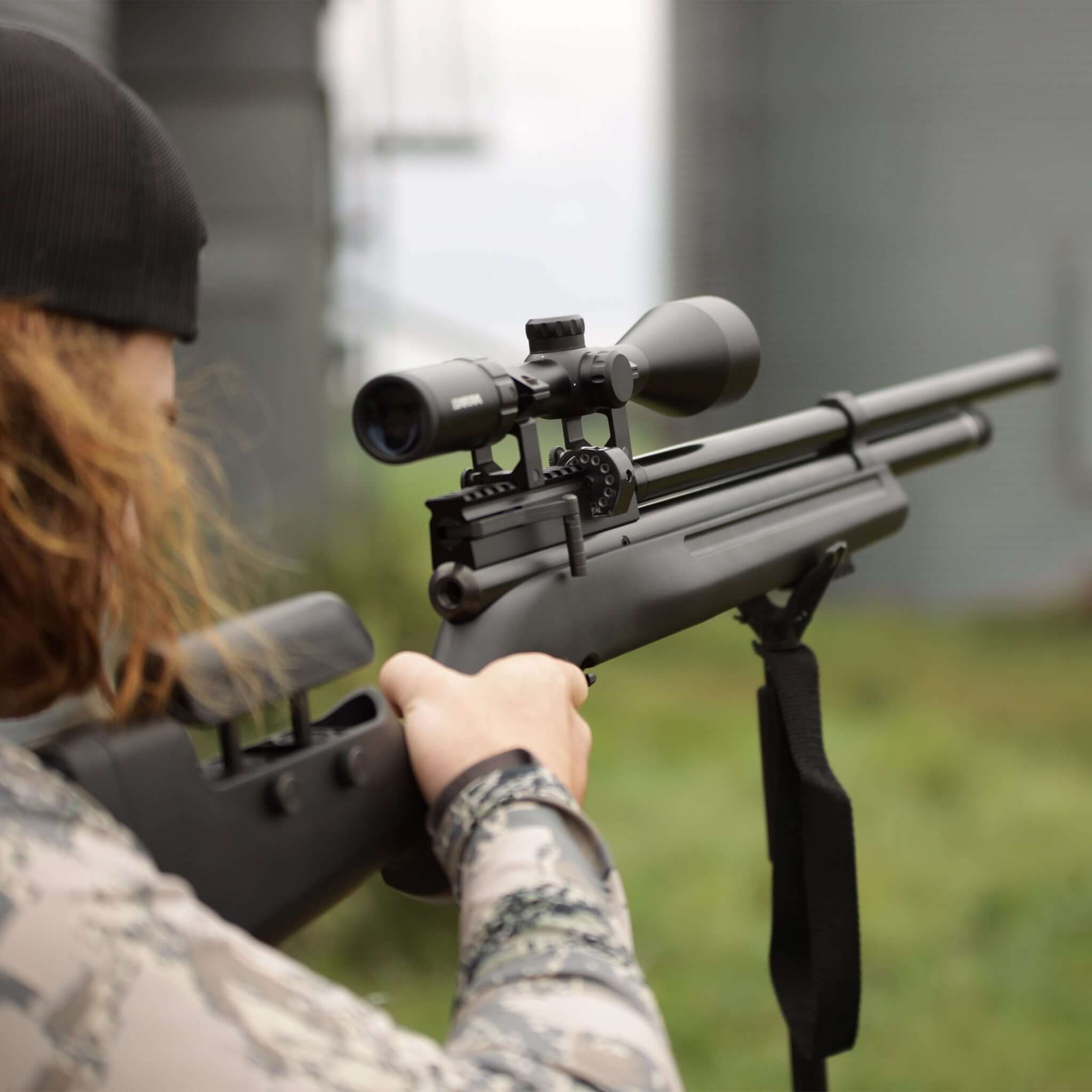
A typical 12g CO2 cartridge can support dozens of operating cycles, but the actual number of shots varies significantly between different devices.
For example, a low-consumption system with an efficient valve may obtain considerably more shots from one cartridge than a high-consumption system. Blowback airguns, rapid firing, high-power equipment, and systems with inefficient valves generally consume CO2 faster.
Instead of treating shot count as a fixed specification, it is more accurate to view it as a performance range determined by the equipment and operating conditions.
Shot count should not be considered a universal cartridge specification.
A cartridge manufacturer controls the CO2 capacity, purity, filling consistency, dimensions, sealing, and manufacturing quality, but the equipment manufacturer controls how efficiently that gas is consumed.
| Factor | Effect on CO2 Consumption |
|---|---|
| Valve efficiency | More efficient valves generally use less CO2 per cycle |
| Shooting frequency | Rapid firing can increase consumption and cooling |
| Equipment design | Different systems have different gas requirements |
| Temperature | Lower temperatures can reduce pressure and consistency |
| Leakage | Gas loss reduces usable cartridge capacity |
| Cartridge connection | Poor sealing may cause unnecessary gas loss |
| Operating pressure | Higher gas demand generally increases consumption |
Therefore, if you are comparing suppliers, do not judge a 12g CO2 cartridge manufacturer only by a claimed shot count. Ask for product specifications, filling consistency, leak-testing procedures, and application-specific test data.
The number of shots you can get from a CO₂ cartridge is not determined by cartridge capacity alone. Even when using the same12g CO₂ cartridge, the actual number of shots or operating cycles can vary depending on CO₂ consumption, operating temperature, valve and regulator design, usage frequency, device efficiency, and cartridge quality. For distributors, importers, OEM manufacturers, and other B2B buyers, understanding these factors is important when selecting the right CO₂ cartridge supplier and cartridge specification for a specific application. The following sections explain the key factors that influence CO₂ cartridge performance, gas consumption, and overall shot count.
The amount of CO₂ consumed during each shot or operating cycle is one of the most important factors affecting the total number of shots from a cartridge. Different devices can require different amounts of CO₂ to complete one operating cycle, even when they use the same 12g CO₂ cartridge. Equipment with higher gas consumption will use the cartridge more quickly, while a more efficient system may achieve more operating cycles from the same CO₂ capacity. For CO₂ cartridge manufacturers, OEM customers, distributors, and equipment brands, understanding the gas consumption of the end application is essential when selecting the appropriate cartridge size and specification. A cartridge should therefore be evaluated based not only on its fill weight, but also on the CO₂ consumption requirements of the equipment.
Operating temperature can have a significant effect on the performance and consistency of a CO₂ cartridge. CO₂ pressure changes with temperature, so colder conditions can reduce the pressure available to the connected equipment, while higher temperatures can increase pressure. During operation, the cartridge can also become cooler as CO₂ is released, particularly when the cartridge is used repeatedly over a short period. This temperature change can influence gas delivery and may result in less consistent performance. For B2B buyers sourcing 12g CO₂ cartridges, it is therefore important to consider the intended operating environment, storage conditions, and transportation requirements. A reliable CO₂ cartridge supplier should provide consistent product specifications and suitable storage recommendations for different applications and markets.
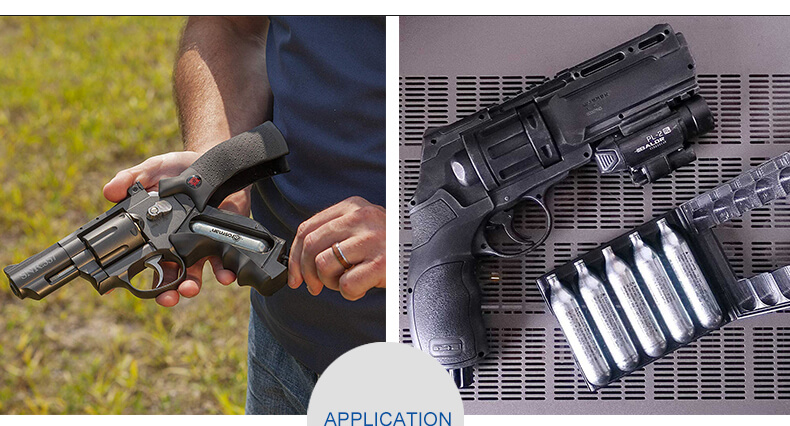
The design of the valve and regulator in the connected equipment directly influences how much CO₂ is released during each operating cycle. A valve that allows a larger amount of gas to pass through will generally consume more CO₂, while controlled gas flow can improve overall efficiency. Regulator settings, valve opening time, operating pressure, and internal gas-flow design can all affect cartridge consumption. As a result, the same 12g CO₂ cartridge may provide different numbers of operating cycles when used with different equipment. For OEM CO₂ cartridge projects, cartridge specifications should be evaluated together with the equipment's valve and pressure requirements to ensure proper compatibility, stable performance, and consistent gas consumption.
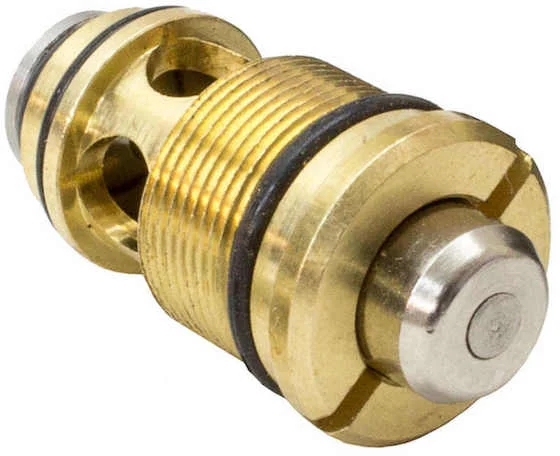
The frequency at which a CO₂ cartridge is used can also affect its practical performance. When CO₂ is released repeatedly in rapid succession, the cartridge may cool because of the gas expansion and release process. If the cartridge is used continuously without sufficient time between operating cycles, this cooling effect can become more noticeable and may reduce pressure and performance consistency. In contrast, moderate usage allows the cartridge more time to return toward a stable temperature. For distributors and equipment manufacturers, this is an important consideration when evaluating CO₂ cartridge performance, because test results obtained under slow operating conditions may differ from results during rapid or continuous use. When comparing cartridge performance between suppliers, consistent testing conditions can provide a more meaningful basis for evaluation.
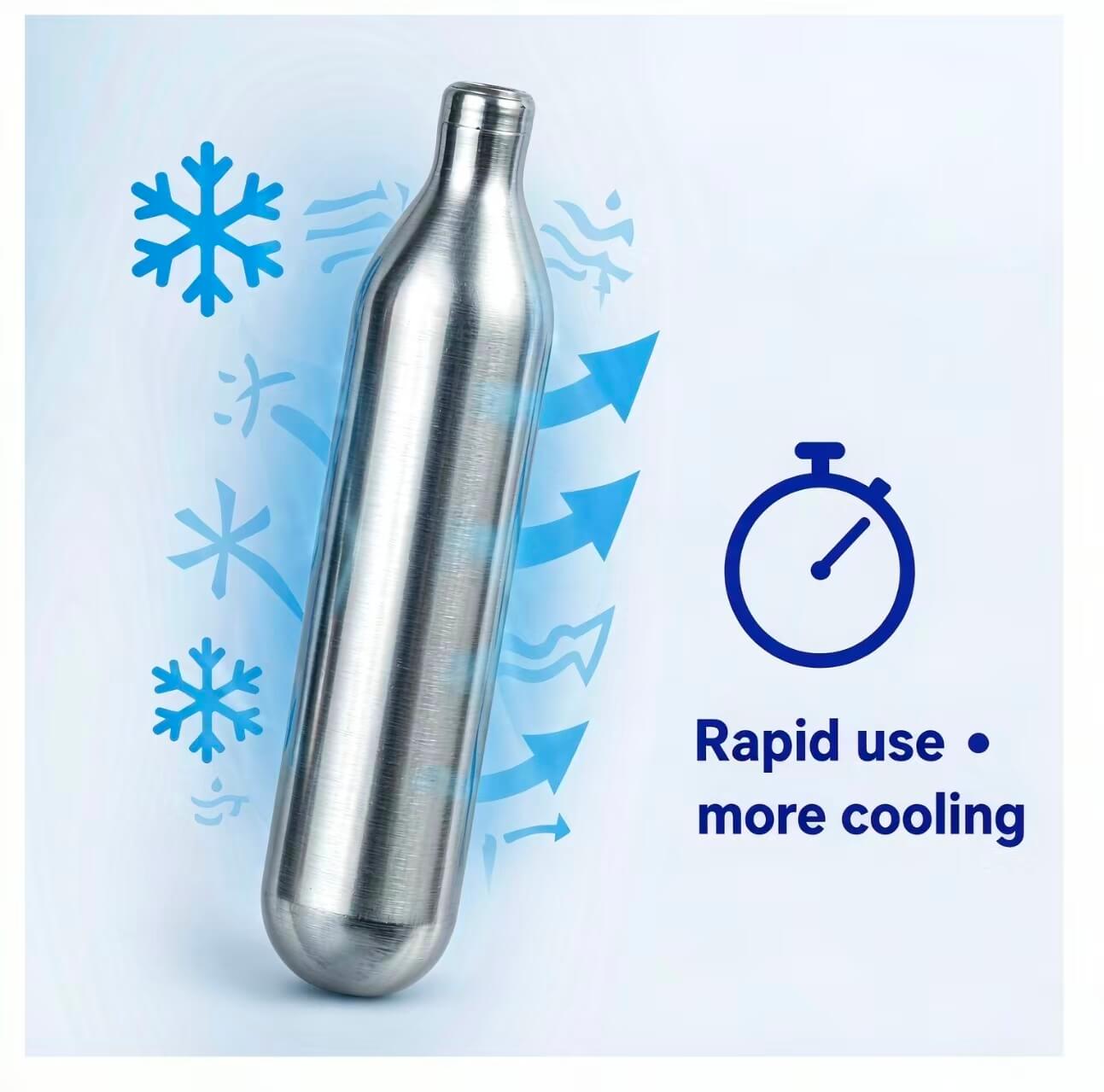
The overall efficiency of the equipment using the cartridge can have a major influence on the number of available operating cycles. A CO₂ cartridge only supplies the gas; the connected system determines how efficiently that gas is used. Valve configuration, gas-flow control, sealing performance, internal design, pressure management, and manufacturing tolerances can all influence CO₂ consumption. Two devices using the same 12g CO₂ cartridge may therefore achieve different results because their gas requirements are not identical. For CO₂ cartridge OEM manufacturers and equipment brands, selecting a cartridge with consistent dimensions, fill weight, sealing performance, and connection specifications can help maintain reliable compatibility and stable system performance across production batches.
CO₂ Cartridge Size and Capacity
The size and CO₂ fill capacity of a cartridge naturally affect the amount of gas available for operation. When other conditions remain comparable, a cartridge containing more CO₂ can support more operating cycles than a smaller cartridge. However, the largest cartridge is not necessarily the most suitable option for every application. CO₂ cartridge sizes are designed to meet different equipment and capacity requirements. When selecting a cartridge, B2B buyers should consider CO₂ capacity together with equipment compatibility, available space, connection type, portability, operating frequency, and expected service life. For CO₂ cartridge distributors, importers, and wholesale buyers, working with a manufacturer that offers multiple cartridge sizes and OEM customization can make it easier to match the right CO₂ capacity to different customer applications.
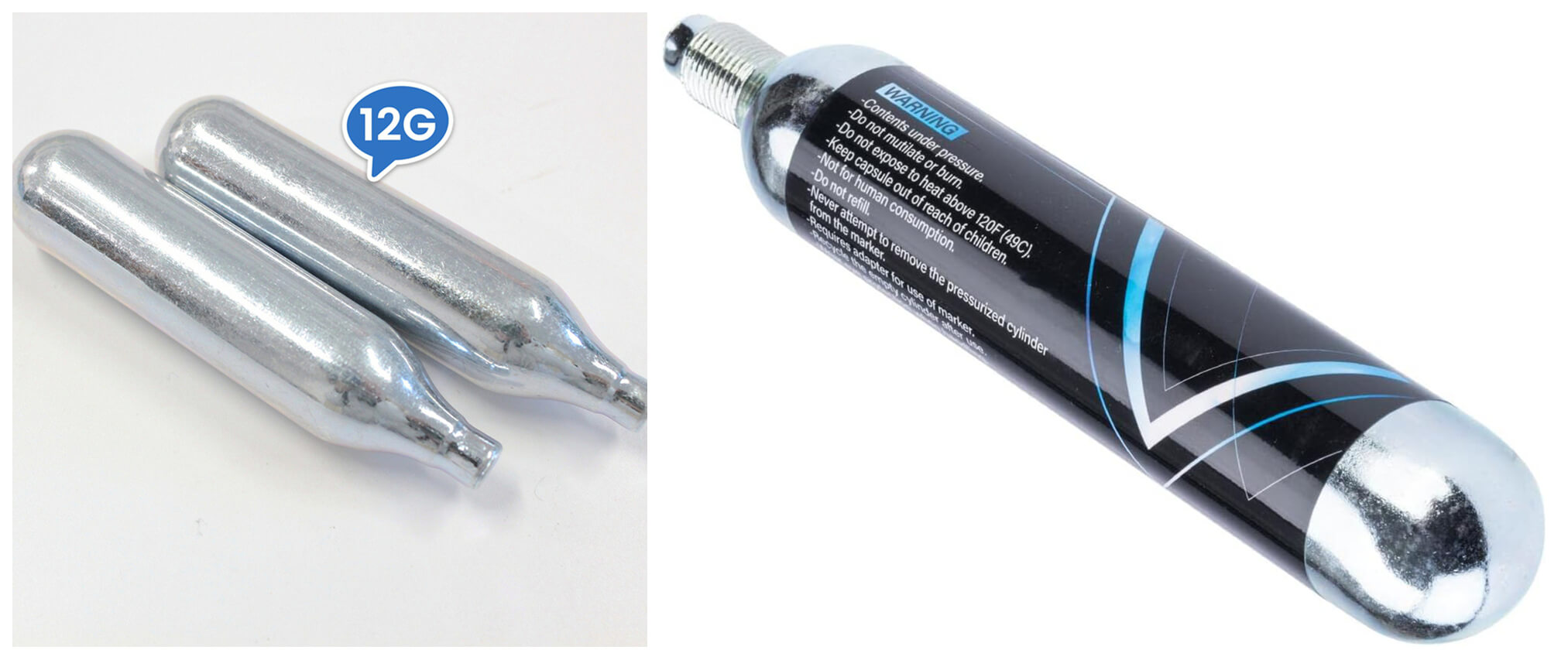
Different cartridge capacities are designed for different equipment and usage requirements.
A 12g CO2 cartridge is compact and convenient for portable applications, while larger cartridges such as 88g, 90g, and 95g are more suitable when longer operating time between cartridge changes is required.
From a nominal capacity perspective:
88g contains about 7.3 times the CO2 of a 12g cartridge.
90g contains about 7.5 times the CO2 of a 12g cartridge.
95g contains about 7.9 times the CO2 of a 12g cartridge.
However, this does not mean that the actual number of shots or operating cycles will increase by exactly the same ratio. Equipment efficiency, valve behavior, temperature, residual gas, and operating conditions all affect usable performance.
| Cartridge Size | Relative CO2 Capacity vs. 12g | Typical Advantage | Common Consideration |
|---|---|---|---|
| 12g | 1 | Compact and portable | More frequent replacement |
| 88g | 7.3 | Longer operating duration | Larger and heavier |
| 90g | 7.5 | High-capacity operation | Requires compatible equipment |
| 95g | 7.9 | Extended gas supply | Less compact than 12g |
For distributors, importers, sporting-equipment brands, and OEM manufacturers, choosing a CO2 cartridge supplier is about more than price. A reliable supplier should ensure consistent quality, stable filling, accurate dimensions, and dependable sealing across production batches.
Key factors include CO2 purity, filling consistency, material quality, dimensional accuracy, leak testing, pressure inspection, batch traceability, export packaging, and OEM/private-label capability.
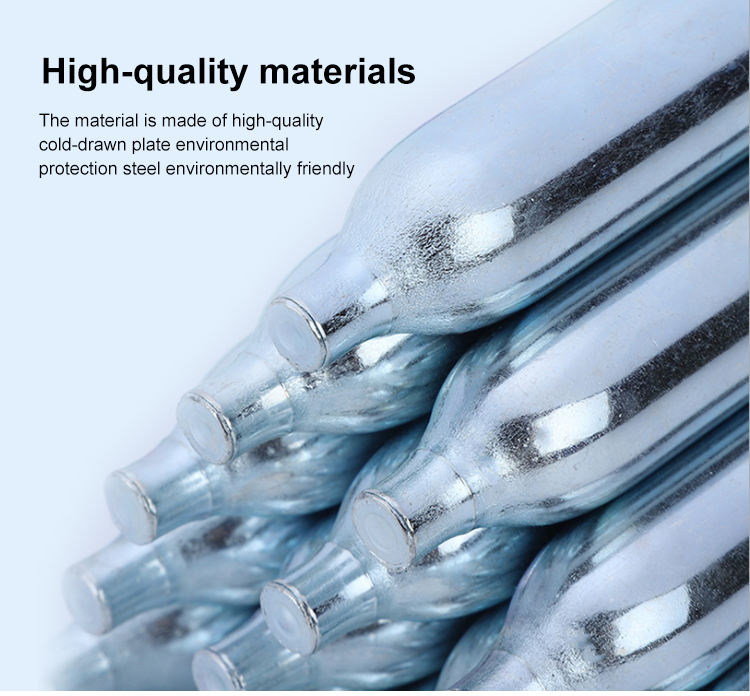
High-purity CO2 can help provide stable performance in compatible equipment. For demanding B2B applications, buyers should ask suppliers for clear specifications regarding gas purity and filling tolerance.
FAIRDALE provides CO2 cartridges with up to 99.999% CO2 purity, together with production and quality-control procedures designed for consistent batch performance.
Manufacturing consistency is particularly important for private-label and OEM programs. A cartridge that performs differently from one batch to another can lead to customer complaints, equipment-performance issues, and increased after-sales costs.
Leak prevention is a critical part of disposable pressure-cartridge manufacturing.
A professional manufacturer should have quality-control procedures covering raw-material inspection, dimensional checks, sealing inspection, leak testing, and pressure-related inspection.
For B2B buyers, it is also useful to evaluate the supplier's:
Production Capacity → QC System → Packaging → OEM Capability → Export Experience
Rather than purchasing solely on price, buyers should consider the total value of the supply relationship.
Cartridge quality can influence the consistency and usable performance of a 12g CO₂ cartridge. While the equipment itself determines how much CO₂ is consumed per operating cycle, factors such as accurate filling, dimensional consistency, sealing quality, and manufacturing tolerances can affect how reliably the cartridge delivers its specified CO₂ capacity. For distributors, importers, and OEM buyers, consistent cartridge quality is especially important because variations between production batches may lead to differences in equipment performance and customer experience.
Filling consistency and sealing performance are important quality factors when evaluating a CO₂ cartridge supplier. Consistent CO₂ fill quantities help maintain stable cartridge specifications across batches, while reliable sealing helps minimize unwanted gas loss during storage, transportation, and use. A professional CO₂ cartridge manufacturer should have quality-control procedures covering filling, dimensions, sealing, leak testing, and batch inspection. For wholesale and OEM projects, these controls can help ensure more consistent 12g CO₂ cartridge performance and support reliable long-term supply.
1. Q . Does a 12g CO2 cartridge work with every airgun?
A. No. Compatibility depends on the airgun's cartridge compartment, piercing mechanism, connection design, and manufacturer specifications. Always confirm compatibility before use.
2. Q. Is a 12g CO2 cartridge better than an 88g cartridge?
A. Neither is universally better. A 12g cartridge is more compact and portable, while an 88g cartridge provides significantly greater gas capacity and can reduce cartridge replacement frequency.
3. Q. What is the difference between 88g, 90g and 95g CO2 cartridges?
A. The main difference is nominal CO2 capacity. 90g contains slightly more CO2 than 88g, while 95g contains more than both. Actual performance also depends on the equipment using the cartridge.
4. Q. Does temperature affect CO2 cartridge performance?
A. Yes. CO2 pressure changes with temperature, and rapid gas release can cause cooling. Operating and storing cartridges under appropriate conditions helps maintain more consistent performance.
5. Q. What should I look for when buying CO2 cartridges in bulk?
A. B2B buyers should evaluate CO2 purity, filling consistency, dimensions, sealing, leak testing, material quality, packaging, production capacity, OEM capability, MOQ, and export experience.
The number of shots from a 12g CO₂ cartridge depends on equipment design, CO₂ consumption, temperature, operating frequency, and cartridge quality. Instead of relying on a fixed shot count, buyers should choose the right cartridge specification for their application.
For distributors, OEM manufacturers, and wholesale buyers, FAIRDALE(CHANGZHOU) Metal Tools Co.,Ltd. provides consistent-quality 12g CO₂ cartridges, with bulk supply, OEM/ODM, and customized packaging options for different markets and applications.


